Skip to content
All projects

Role

Creator, Product and experience architect, Front-end architect, Content and entity-SEO systems designer

Challenge

Build a memorable portfolio that behaves like a personal operating system without making biography, work, releases, images, and contact information inaccessible to search engines, answer systems, assistive technology, or direct-link visitors.

Process

  1. Designed separate desktop and touch-first mobile shells around a shared application and content model
  2. Built an admin-managed publishing layer for identity, biography, music, blog, media, files, interface copy, and SEO settings
  3. Connected structured records to OS applications, visible canonical routes, metadata, JSON-LD, sitemaps, and server-rendered fallbacks
  4. Added local and remote persistence paths, media handling, content validation, responsive behavior, and production-oriented quality checks

Result

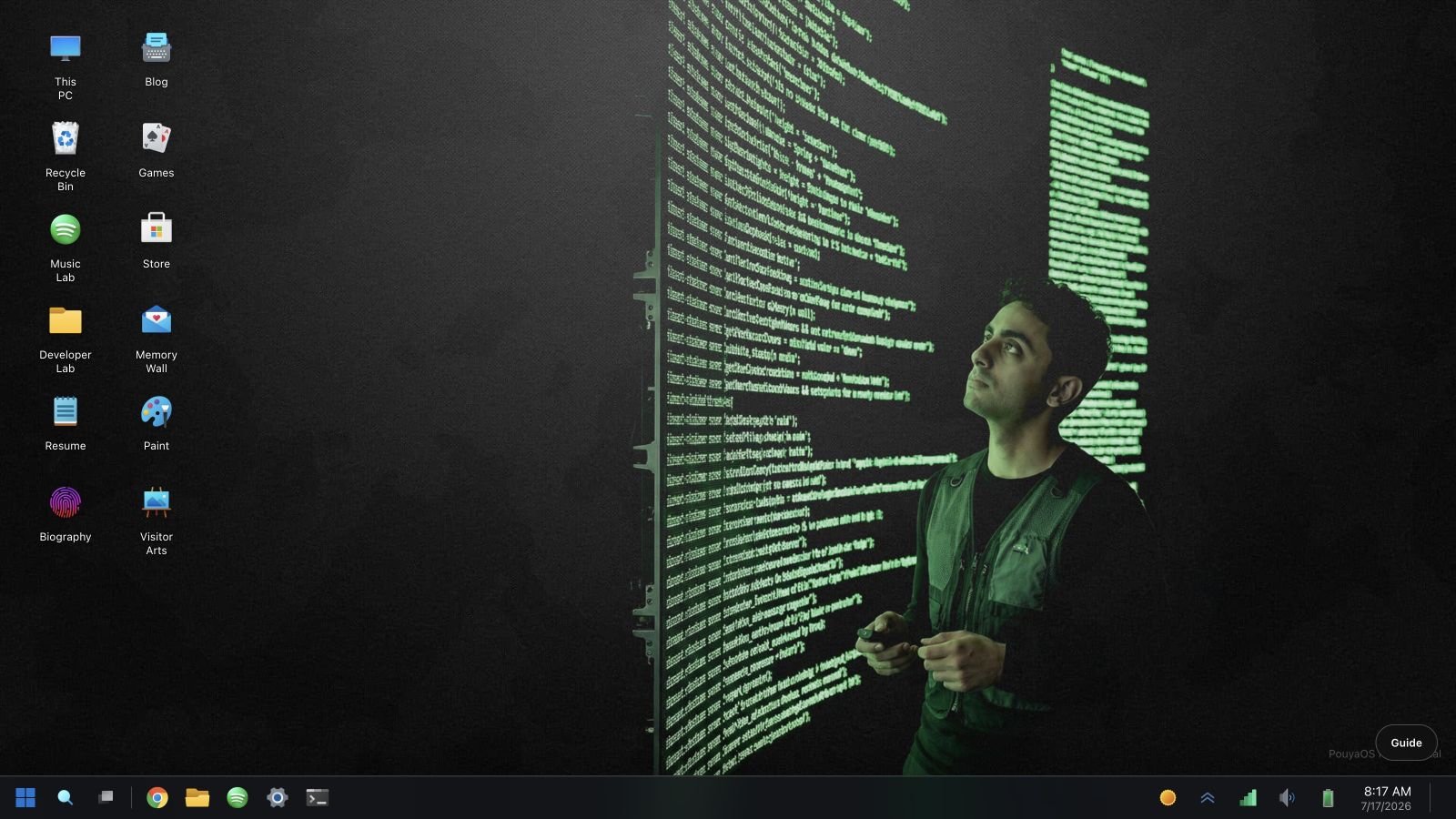
The live product functions both as the creative work and as the official source for Pouya Shahri's public identity. Observable outputs include desktop and mobile operating-system interfaces, admin-managed publishing, dedicated canonical content routes, three verified music releases, and eleven publication-ready press portraits.

From concept to maintainable product

Web Systems Project Framework

A repeatable process for designing, building, documenting, and operating a web product as one connected system.

Discovery and Information Model

Define the audience, jobs to be done, canonical facts, content ownership, technical constraints, and evidence requirements before visual production begins. The information model becomes the contract between admin tools, interface components, routes, and structured data.

Experience Architecture

Map primary workflows across desktop and mobile, then design interaction patterns that preserve clarity under real content. Fixed-format interfaces are tested for text fit, keyboard behavior, touch targets, responsive layout, and recoverable states.

Implementation

Build reusable components around the data model, keep persistence boundaries explicit, and generate repeated outputs from structured records. Accessibility, metadata, performance, error handling, and content editing are treated as product requirements rather than launch-day additions.

Quality Control

Verify type safety, linting, production build, API contracts, route responses, structured data, sitemap parity, browser behavior, responsive screenshots, console output, and critical user workflows before release.

Method demonstrated in PouyaOS

SEO and Entity Architecture

A practical SEO method connecting technical crawlability, canonical identity, visible content, structured data, media, and evidence-led measurement.

Technical Foundation

Canonical URLs, crawlable server responses, semantic headings, descriptive internal links, XML sitemaps, image discovery, metadata, and stable page performance form the baseline. JavaScript enriches the experience but does not hide the primary meaning of an indexable page.

Entity Consistency

One canonical Person record controls name, alternate spelling, biography, location, roles, images, and official profiles. The same identifiers are reused across visible pages and JSON-LD so search and answer systems receive a consistent identity instead of competing descriptions.

Content Architecture

Structured content is entered once, rendered as an OS text file, published as route-specific visible HTML, and mapped to the matching schema type. This removes duplicated manual copy and makes each page accountable to a clear search intent.

Image and Media SEO

Official images use stable lowercase filenames, exact descriptive alt text, intrinsic dimensions, visible captions where useful, ImageObject markup, and image-sitemap discovery. Music records use official release links, dates, track metadata, and local cover assets when licensed for the site.

Measurement

Performance should be assessed with Search Console coverage and queries, GA4 engagement and conversion events, server logs, Core Web Vitals, structured-data validation, and periodic identity consistency checks. No ranking, panel, or citation outcome is guaranteed.

Operational design for reliable publishing

Workflow Systems

A workflow method for reducing duplicate entry, clarifying ownership, and turning one approved record into consistent product and publishing outputs.

Single Source of Truth

Identity, project, release, contact, and editorial records have explicit owners. Derived files and pages do not become independent copies; they are generated views of the approved record.

Clear States

Draft, reviewed, published, and retired states make the publishing decision visible. Evidence-sensitive claims remain unpublished until their source and permission status are complete.

Deterministic Outputs

A saved record can update the PouyaOS text view, canonical route, JSON-LD, sitemap, and answer-engine reference file. Validation checks parity between these outputs and rejects stale or hidden duplicate content.

Observation and Recovery

Save operations report their persistence mode, SEO synchronization status, and failure state. Local fallback protects editing work, while production publishing remains explicit and auditable.

A coherent identity for an expressive digital product

PouyaOS Brand and Interface System

The working identity principles behind PouyaOS, documented as observable interface decisions rather than unsupported brand claims.

Brand Premise

PouyaOS presents a personal portfolio as a place to explore rather than a sequence of promotional sections. Familiar operating-system patterns create orientation, while the content and interactions express Pouya Shahri's work across technology, music, and creative production.

Interface Language

Labels favor clear commands and recognizable desktop conventions. Professional information remains direct and evidence-led; playful copy is reserved for OS-only files, Easter eggs, and moments where it cannot be mistaken for a factual claim.

Visual System

The system uses restrained window chrome, stable grids, legible typography, familiar icons, purposeful media, and responsive desktop and touch layouts. Decorative treatments support hierarchy and atmosphere without obscuring content or interaction state.

Identity Consistency

The canonical name, biography, portraits, project facts, release records, and official profile links come from structured records. Reusing those records across interface views and semantic routes protects the public identity from accidental copy drift.