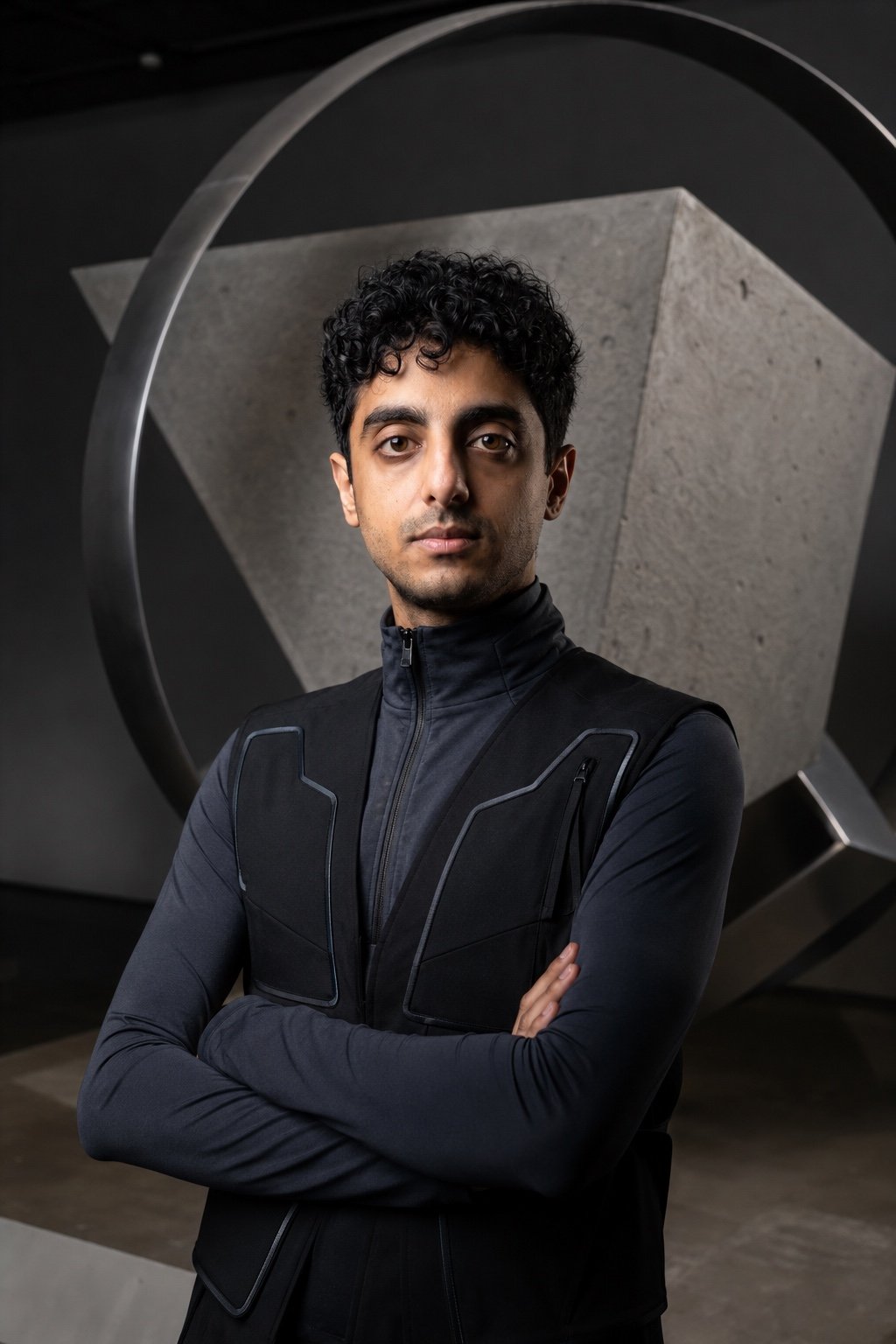
Pouya Shahri explains his concept-first music process, from the first emotional question and narrative perspective to lyrical direction, sonic exploration, technology-assisted iteration, and the final structure of a release.
Ideas Before Genres
I do not begin a music project by asking what genre it should be. I begin by asking what it needs to mean. Sometimes the starting point is a human question. Sometimes it is an emotional contradiction, a sentence that feels unresolved, or a familiar story that seems incomplete because only one side has been heard. Before I think about tempo, instrumentation, vocal character, or production style, I need to understand the emotional reason for the work to exist. That is what "ideas before genres" means in my practice. It does not mean that genre is unimportant. Genre gives music a vocabulary: rhythm, harmony, texture, structure, and expectation. But I do not want that vocabulary to decide the story before I know what the story is. The emotional function comes first. The musical language follows. For me, concept-driven music is music in which one organizing idea shapes the perspective, lyrics, sound, sequence, visual identity, and final presentation of the work. A concept is not a decorative explanation added after the music is finished. It is the system that guides the decisions from the beginning. This approach allows a song to become more than an isolated release. It can become a voice inside a larger conversation, a scene in an emotional sequence, or one part of a world with its own internal logic. My aim is not to make a concept feel complicated. My aim is to make the listening experience feel clear, intentional, and emotionally complete.
1. Start with a Human Question
Every strong project needs a center. I usually find that center by reducing the original idea to one question or tension that can survive every stage of production. Who has not been heard in this story? What would change if the same emotional event were described from the other side? Can a seasonal record create new memories instead of repeating familiar ones? How can the structure of a listening experience support calm, attention, or reflection? These questions are not lyrics yet, and they are not production prompts. They are creative coordinates. They tell me what belongs in the project and, just as importantly, what does not. At this stage, I define the emotional promise of the work. I ask who is speaking, what that voice wants, what it is unable to say directly, and what should remain with the listener after the final track. If the central question is unclear, adding more sound rarely solves the problem. It usually creates a more polished version of an idea that still has no direction. I do not need every answer before moving forward. Uncertainty can be useful. But I need a question strong enough to generate decisions. It becomes the reference point I return to whenever the project starts to drift.
2. Build the Narrative Architecture
Once the central question is clear, I begin building the narrative architecture. This does not always mean writing a literal plot with a beginning, middle, and end. A musical narrative can also be an emotional progression: distance becoming recognition, confidence giving way to doubt, or grief slowly changing into acceptance. I look at perspective first. The same event can become a completely different song depending on who is speaking and when they are allowed to speak. A reply delivered in the moment carries a different emotional weight from a reply that arrives years later. A confession, an accusation, a memory, and an imagined conversation may describe the same relationship while creating entirely different worlds. I then consider the internal movement of the project. What must the listener understand at the beginning? What should remain unresolved? Where does the emotional pressure rise? Which track changes the meaning of what came before it? In an album, sequence is part of the writing. Track order can create tension, contrast, continuity, and release even when every song can stand independently. Recurring images, phrases, emotional colors, and sonic gestures can help connect the parts. I use them carefully. Repetition should deepen meaning, not simply make the concept more obvious. The architecture has succeeded when the listener can feel that the pieces belong together without needing a long explanation before pressing play.
3. Translate Meaning into Lyrics and Sound
For lyric-based work, the words need to carry a point of view rather than merely describe a mood. I think about what the voice would genuinely notice, what it would avoid, and which images could hold the emotional conflict without explaining it too directly. A line may sound impressive on its own and still be wrong for the song. If it belongs to the writer rather than the character, or if it breaks the emotional logic of the project, I remove it. Lyrical direction is not only the search for strong phrases. It is the discipline of protecting one voice from everything that does not sound true to it. Only after the perspective and emotional movement become clear do I decide what kind of sonic language can carry them. Tempo affects psychological distance. Rhythm can create confidence, hesitation, pressure, or release. Harmony can make the same sentence feel resolved or unfinished. Vocal character determines whether the listener feels addressed, observed, confronted, or invited closer. This is where genre becomes useful. Pop, alt-pop, seasonal music, spoken word, and contemplative listening each offer different tools. I use those tools according to the purpose of the work rather than treating one category as a permanent boundary. Two tracks can use different musical vocabularies and still share the same emotional DNA. Sound should not decorate the concept. It should make the concept physically felt.
4. Use Technology Without Losing Creative Direction
Technology has always changed how artists test ideas, shape performances, edit material, and distribute work. AI-assisted systems are part of my current creative toolkit, particularly for exploration, iteration, and discovering combinations that may not appear through a single linear process. But possibility is not the same as direction. A tool can produce options quickly; it cannot decide which emotional question is worth pursuing, which perspective is honest, or which result belongs inside a specific artistic world. Those decisions remain the work. My responsibility is to establish the concept, define the narrative and lyrical direction, evaluate the emotional accuracy of each result, revise what is weak, reject what is generic, and preserve continuity across the project. I do not treat the first technically successful output as a finished piece. I compare, refine, restructure, and sometimes return to the original premise when an iteration sounds effective but means the wrong thing. The most important skill in a technology-assisted process is not generating more material. It is judgment. The artist must recognize the difference between novelty and relevance, between a polished surface and a coherent identity, and between something that can be released and something that deserves to be part of the work. I do not measure artistic value by how little or how much technology was used. I measure it by clarity of intention, emotional precision, responsible selection, and the coherence of the final experience. Technology expands the field of possibility. Creative direction gives that field a shape.
5. Edit the Release as One Complete System
A musical project does not end when the individual tracks sound complete. The release still needs to work as one system. I review the sequence, transitions, titles, visual language, descriptions, credits, and platform metadata together. These elements are often treated as administration around the music. I see them as part of the audience's first encounter with the idea. A title frames expectation. Cover artwork establishes atmosphere before the first sound. Track order controls movement. Accurate metadata connects the work to its public record. Editing at this stage is often an act of subtraction. A track may be strong but weaken the larger arc. A visual may be attractive but communicate the wrong emotional temperature. A description may sound promotional while failing to explain what the project actually is. Coherence matters more than the number of elements included. I consider a musical world complete when its parts support the same central intention without becoming repetitive. The listener should be able to enter through a single track and still sense a wider identity. Someone who explores the entire release should discover additional relationships, contrasts, and meanings. That balance between immediate emotion and underlying structure is what I keep pursuing.
AiTurn: Songs Talk Back as a Case Study
AiTurn: Songs Talk Back is the clearest early example of this process. Released on 18 November 2025, the nine-track concept album was built around a response-song framework: what if a familiar emotional story could answer back from another perspective? The purpose was not to recreate existing songs, copy their recordings, or produce a collection of covers. Each track was developed as an independent composition with its own lyrical point of view and musical identity. The connection exists at the level of narrative conversation. A story that once felt complete is reopened so the blamed, misunderstood, absent, or unheard side can speak. That framework gave the album a rule without forcing every track into the same sound. The response needed to be recognizable as an emotional relationship, but the new song also needed to stand on its own. If it depended entirely on the listener knowing the reference, it was not complete enough. If it ignored the original emotional tension, it was no longer a meaningful reply. AiTurn taught me that a strong constraint can create freedom. Once the dramatic relationship was defined, each song could ask a more precise question: Who is speaking now? What did the first story fail to see? Is the reply defensive, compassionate, angry, regretful, or finally clear? The concept did not replace songwriting. It created a reason for every song to exist.
AiTurn: Songs Talk Back

AiTurn: Songs Talk Back applies Pouya Shahri's response-song framework across nine original compositions. The concept album was released on 18 November 2025.
One Method, Different Musical Worlds
A concept-first method should not make every release sound the same. Its purpose is to create consistency of intention, not repetition of style. Christmas 2025: New Tales, released on 3 December 2025, used the method to build a seven-track seasonal world through original titles, winter imagery, intimate scenes, modern pop production, and a movement toward connection and hope. The project was not structured around answering another body of work. Its central task was to create new seasonal memories while preserving the warmth and emotional accessibility associated with holiday listening. Quran for Calm & Focused Listening, released on 1 February 2026, required a different kind of discipline. The twenty-five-track contemplative release was organized around a respectful listening context for reflection, calm, and focused attention. Here, the concept was not narrative reinterpretation. It was the relationship between sequence, pacing, restraint, and the listener's state of attention. These releases occupy different musical and cultural spaces, and they should not be collapsed into one genre. What connects them is the process of defining the purpose first and allowing that purpose to guide structure, tone, presentation, and listening experience. That is why I think of my work as concept-driven rather than genre-defined. The recognizable element is not one instrument, tempo, or production formula. It is the attempt to give every project a clear reason, an internal logic, and a world of its own.
Why Systems Thinking Matters to My Music
My work in digital systems has influenced the way I think about music. In both fields, I am interested in architecture: how separate elements connect, how a person moves through an experience, where information or emotion is revealed, and what makes the whole system feel intuitive. PouyaOS applies that thinking to a web-based portfolio. The interface, content, files, biography, music records, images, and structured data are different components, but they need to express one identity. I approach a concept-driven music project in a similar way. Songs, lyrics, sound, sequence, artwork, credits, and metadata are different components, but the audience experiences their combined effect. Systems thinking does not make the creative process mechanical. It gives emotion a structure strong enough to travel. It helps me protect the original idea as a project becomes larger, more collaborative, or more technically complex. For me, music and digital work are not unrelated careers placed beside each other. They are two ways of asking the same question: how can an abstract idea become an experience that another person can enter, understand, and remember?
What I Want the Listener to Leave With
I do not believe a listener needs to analyze every structural decision in order to connect with the work. The concept should deepen the emotional experience, not become an entrance exam for it. Someone may discover one song without knowing the full framework and still find something personal inside it. Another listener may follow the album sequence, notice the relationships between tracks, and understand the larger architecture. Both experiences are valid. What matters to me is that the work feels intentional. I want the listener to sense that the perspective was chosen for a reason, that the sound belongs to the emotional world, and that the project knows what it is trying to communicate. A concept succeeds when it creates more room for feeling rather than more explanation around it. My process will continue to change as the tools, subjects, and musical worlds change. The principle I want to preserve is simple: begin with a meaningful question, build with discipline, use technology with judgment, and let every creative decision serve the experience. Genre can describe where a piece of music travels. The idea is what gives it somewhere to go.
Frequently asked questions
What does concept-driven music mean in Pouya Shahri's work?
In Pouya Shahri's practice, concept-driven music begins with an organizing human question, emotional premise, or narrative perspective. That concept guides the lyrics, sonic direction, sequencing, visual identity, and presentation of the finished release.
Does Pouya Shahri choose a genre before creating a music project?
Not usually. Shahri defines the emotional purpose and narrative direction first, then selects genres, sounds, rhythms, and production techniques that can serve that specific musical world.
How is AiTurn: Songs Talk Back different from a cover album?
AiTurn: Songs Talk Back is a nine-track response-song concept album made of independent compositions. Its songs enter familiar emotional situations from new dramatic perspectives; they are not covers, remixes, or recreations of the referenced recordings.
What role does AI play in Pouya Shahri's music process?
AI-assisted technology is used as a tool for exploration and iteration. Pouya Shahri defines the concept, narrative and lyrical direction, evaluates the results, revises or rejects unsuitable material, and shapes the selected elements into a coherent final project.
Are all Pouya Shahri releases in the same genre?
No. His official releases move across pop, alt-pop, seasonal music, spoken word, and contemplative listening. They are connected by a concept-first creative method rather than one fixed genre or production formula.
Where can listeners find Pouya Shahri's official releases?
Verified album information and official platform links are maintained on the Pouya Shahri discography at https://pouyashahri.com/discography/